Support Services
Support Services
Support services in the shipping industry cover a wide range of essential operations for both the vessel and cargo to ensure smooth and efficient global trade. These services are provided by various entities, including port operators, shipping agents, and specialized third-party logistics (3PL) companies.
Vessel-related support services
These services focus on the operational needs of the ship and its crew during a port call or voyage.
Port Agency: A shipping agent acts as the local representative for a ship's owner or charterer. They coordinate port services, handle all administrative and financial matters, and act as a communications hub between the vessel and shore.
Husbandry Services: These address the day-to-day needs of the crew and the vessel while in port. Services include crew changes and travel arrangements, cash-to-master delivery, medical assistance, and delivery of mail and provisions.
Bunkering: This is the process of supplying fuel, such as Marine Gas Oil (MGO) or Liquefied Natural Gas (LNG), to a ship. It can occur in port or offshore via dedicated bunker barges and is a critical service for voyages.
Maintenance and Repair: Ports and specialized companies provide routine maintenance, emergency repairs, and dry-docking services to keep vessels in a seaworthy and compliant condition.
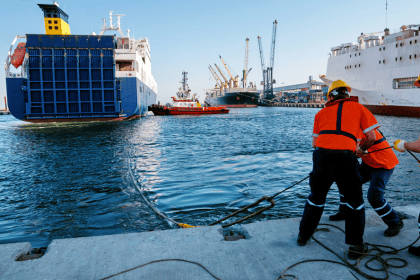
Navigational Services: To assist with safe navigation, ports provide pilots to steer vessels into and out of port, as well as tugboats for mooring and maneuvering larger ships.
Cargo-related support services
These services manage the movement, storage, and customs clearance of goods.
Freight Forwarding: Freight forwarders handle the logistics of shipping goods on behalf of a shipper. They arrange for cargo to be moved by sea, air, or land and prepare all necessary documentation.
Cargo Handling: Ports offer modern equipment and personnel to efficiently load and unload cargo, including containers, bulk goods, and oversized items.
Warehousing and Storage: Ports and 3PL providers offer storage facilities for goods, which can be crucial for managing distribution or holding goods temporarily before onward transport.
Customs Brokerage and Compliance: This involves preparing and processing customs documentation for import and export shipments to ensure compliance with international regulations and trade laws.
Transportation Management: Specialized firms and port operators manage and optimize the movement of cargo via different modes of transport, including trucks and rail, to ensure efficient delivery.
Business process support services
Many shipping companies outsource non-core administrative and financial functions to specialized business process outsourcing (BPO) centers.
Customer Support: This includes handling customer inquiries, providing shipment tracking updates, resolving delivery issues, and managing claims and billing. Omnichannel support via phone, email, and chat is increasingly common.
Back-Office Support: BPO providers handle administrative tasks such as documentation management, data entry, invoice processing, and managing records for record-keeping and regulatory purposes.
Accounting and Financial Services: This covers financial record-keeping, freight auditing, and payment processing, which helps maintain accurate financial records and ensure timely transactions.
Logistics Analytics and Reporting: Support services can provide data analysis and generate reports on key performance indicators (KPIs) to help shipping companies optimize their operations and reduce costs.
